Casa Bencomo (restored)

In my previous post Casa Bencomo from 2010, I showed a set of images of the derelict traditional townhouse taken in 2006 and the start of the renovations in 2010. The renovations have now been completed, and the townhouse now houses San Sebatian’s tourist information as well as an exhibition of the history of the island.

When we walked into the restored building, our first impression was that the restorations had been done unsympathetically. However, when comparing the photos taken with those from the derelict courtyard in 2006 that evening, we realised that that judgement had been a bit rash. Granted, the property is fairly empty and a bit too sparsely furnished with a drab colour scheme compared to the look of an original inhabited townhouse. But a few large green plants in the empty pots would go a long way to make the courtyard look less bare.

Please have a close look at the two photos above taken in January with the three photos of the derelict court yard taken in 2006 below. These clearly show that a lot of the original features, especially the woodwork and balcony, have been very well restored. The main differences are that the original three storey East side has been converted in two storeys with less windows, and there is a well that was not visible under the rubble in 2006.
Indian Ocean abstracts

A serie of six abstracts of the Indian Ocean taken at Kalutara on the East coast of Sri Lanka. The abstract nature has been created ‘in camera’ by moving the camera while shooting with a slow shutter speed, a technique known as ICM (Intentional Camera Movement).

Harani at night

I am finally getting round to add some posts to my photo blog from our trip to Symi last July. In this first post, two night shots (taken a few days apart) of the wonderful view to Hinari from our balcony. A wonderful view that we enjoyed with a glass of wine every night before heading out for dinner during our two weeks stay.

Ermitas in the landscape

La Gomera is literally littered with little chapels, or ermitas as they are called locally in Spanish. So where ever you are in the dramatic landscape on the island, there is always one nearby, whether hidden deep inside the laurel forest, or prominent with 360˚ panoramic vistas on top of the high ridges or in the shadow of towering cliffs deep down in the dramatic barancos.

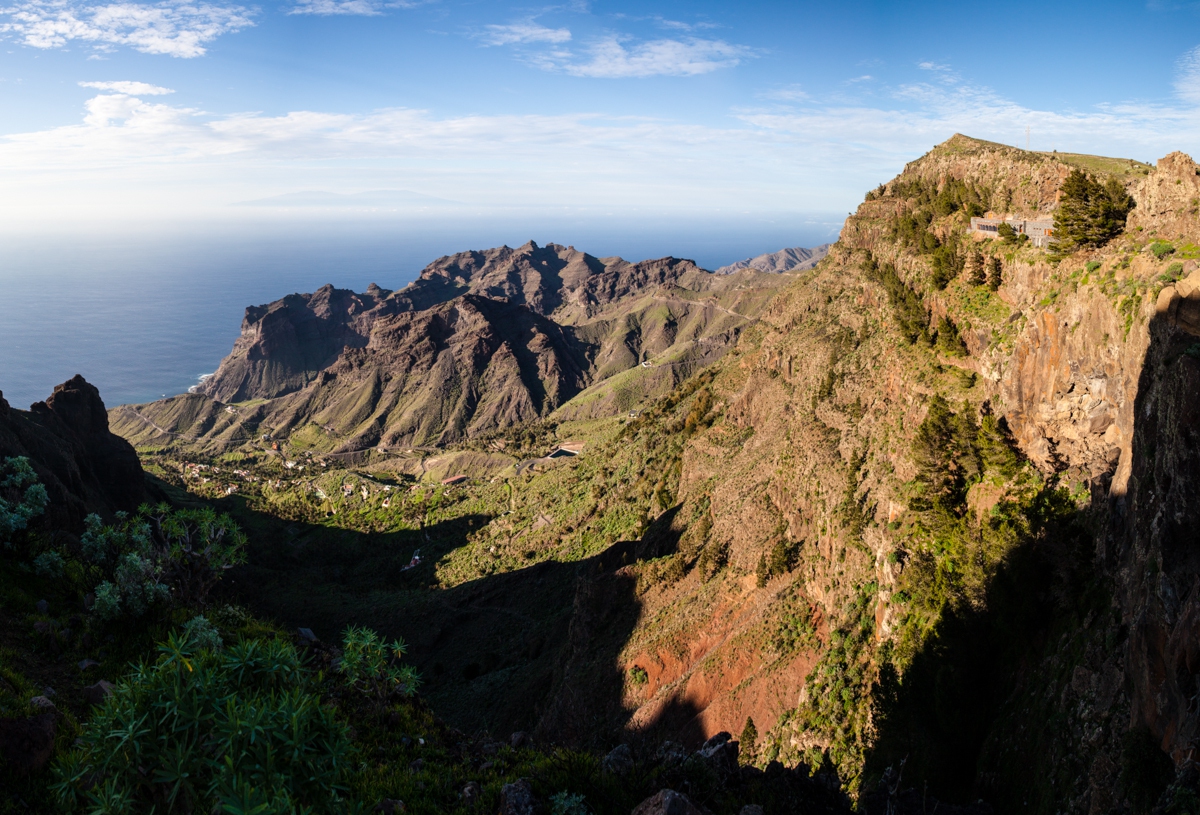
Here are two striking little ermitas set in the dramatic landscape of Tagaluche: Ermita de San Salvador in the shadow of the towering cliffs of Galión (above) and a little Ermita and graveyard in the shadow of Lomo del Viento (below), both taken from Risco de Heredia.

Living in the cloud villages

The villages on top of La Gomera are widely known as the cloud villages, with Las Hayas, El Cercado and Chipude being the famous trio, situated more than 1000m above sea level in the heart of the island. Some days these villages are basking in sunlight, other days they are obscured completely by clouds. Irrespective of the weather, these villages are a joy to explore by foot, with a drink in a local cafe as a treat at the end.

A derelict finca

One of our favourite short walks on La Gomera starts at Montana de Destene, just down from Dolgelada de Parazza on the GM-3 to Playa Santiago. In the bend, shortly before Jerdune, you can drive onto the rough old road and park where the old road swings back on itself and the walking route down to Playa Santiago and El Cabrito start. The first stretch of this well marked long distance route round Roque de Berruga to Alto de Tacalcuse makes for an extremely rewarding, easy morning or afternoon walk.

The path meanders along the ridge and round Roque de Berruga with superb views to all sides, from the impressive Heights of La Montañeta to the West, the majestic Barranco de Chinguarime and towering Alto de Tacalcuse to the South and Roque de Magro and Roque de Sombrero on the other side of Barranco Juan de la Guancua to the East as you can see in my post Colourful Jerdune from 2010.

What makes this walk even more special for us are the tranquility of the location and the derelict finca’s that are scattered along the ridge and down the steep South Westerly slope of Roque de Berruga. Exploring these finca’s is a must, especially those a bit away from the beaten track of the long distance walking route. On our previous visit a few years earlier, this finca had a locked door and an intact roof. Now the door is blown of it’s hinges, and the roof has partly caved in.

Whimbrel (Numenius Phaeopus)

As promised in my last post with the little egret, here are some photos of the whimbrel (numenius phaeopus).

Seeing the whimbrel scurry along the rocky shore was a daily delight. It was hard to spot though, as it is very fast moving. One second you see it, then it disappears behind a rock, and before you know it, it appears again several metres along. After watching it for a few days from the balcony, the birds daily routine became obvious. It would fly in and start on the rocky shore to the left or the right of the rocky sweep before us, then scurry along the rocks to the other side, before flying off again.

One morning, I spotted it on far on the right, starting it’s move. So I grabbed my camera, rushed down and headed to the left. I sat down on the stairs leading down from the the pavement to the rocky shore and patiently waited. Within minutes I spotted it, and it was, as expected, heading my way meandering through the rocks. Due to a fairly high tide, the whimbrel was close and it’s lateral move past me gave me the opportunity I had been waiting for.

I suspected it to be a curlew, so I had a look on the internet and found lots of images that seemed to confirm my thought, it possibly being the slender billed curlew. On returning home I consulted the Birds of the Atlantic Islands. It turns out to be a whimbrel (numenius phaeopus), a regular to the Canary islands especially in winter, and not the slender billed curlew, a very rare vagrant visitor. The small dark crown divided by median strip was the tell tale sign.

Little Egret (Egretta Garzetta)

Wildlife and birdlife is fairly sparse on La Gomera, especially in the winter. But for those keeping their eyes peeled, there are still some special birds to be seen. While staying in La Puntilla, with a view from our balcony directly onto the rocky shore, an egret and a whimbrel were a daily delight. Amazingly, the tourist walking along the shore were completely oblivious of their presence.

It was wonderful (and relaxing!) to just watch these birds looking for food while wandering along the rocky shore and dodging the incoming waves. The egret looks predominantly for fish in the incoming waves, while the curlew spends his energy poking its long beak in the holes in the volcanic rocks, looking for little crustaceans. Unfortunately, both were mostly too far away to get any decent photos.

One morning, with a lot of patience and careful negotiation around some large volcanic rocks to remain out of view, I managed to get close enough to take a couple of photos of this lovely little egret, before it was scared away by the tourists congregating on the pavement along the shore, wondering what I was up to with that big camera and lens.

I will share some photos of the whimbrel in the next post.

Sunset over El Hiero from Puntilla

One of the highlights of our stay in La Gomera over Christmas and New Year were, without a doubt, the spectacular sunsets over El Hiero. Nothing is more relaxing than to sit on the balcony of our apartment in Puntilla with a glass of vino tinto and watch the sun slowly disappear before going out for dinner.

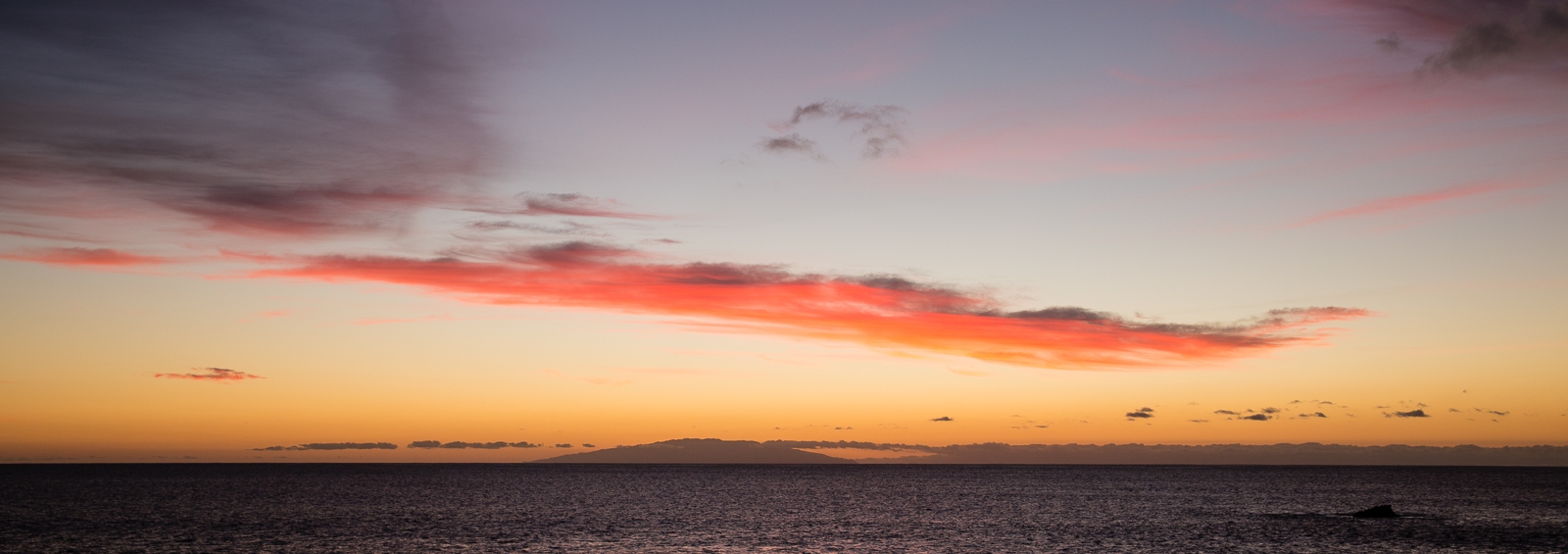
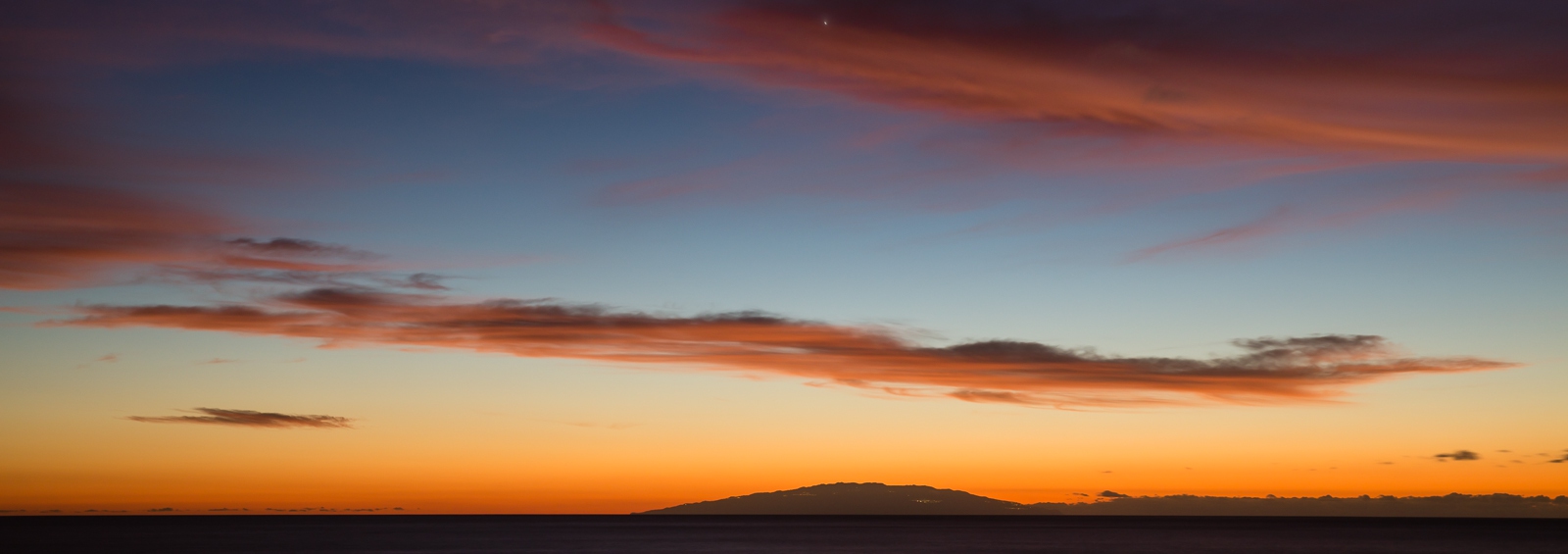
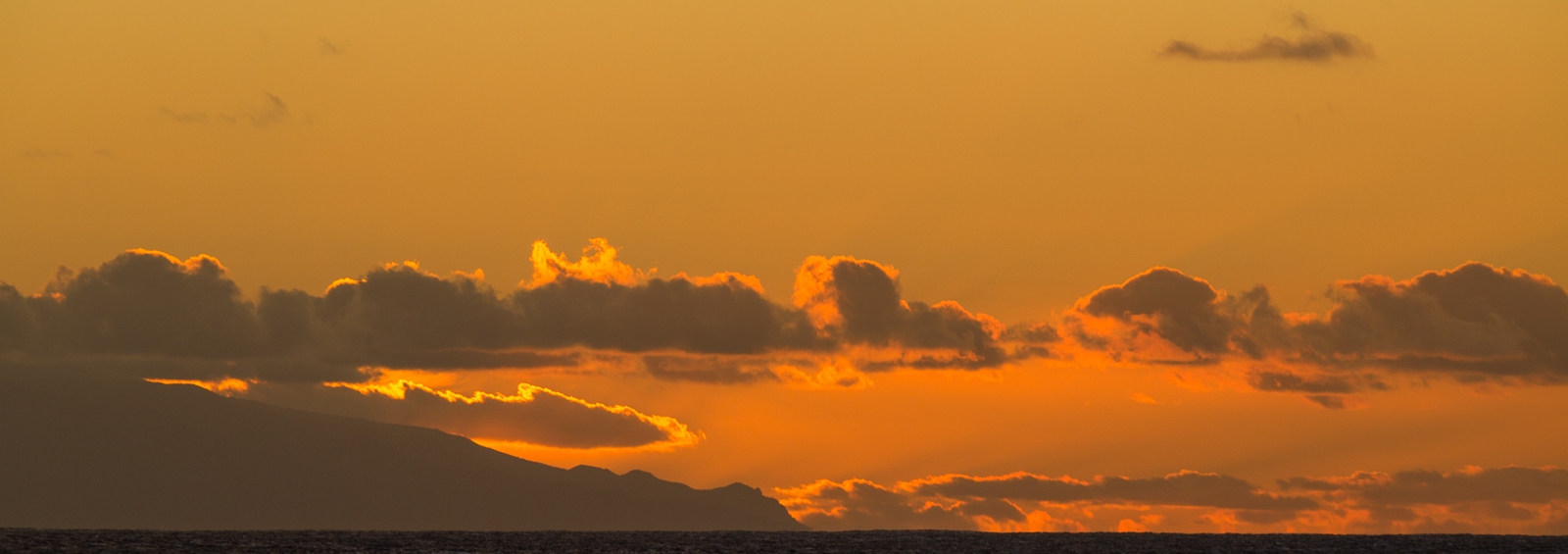
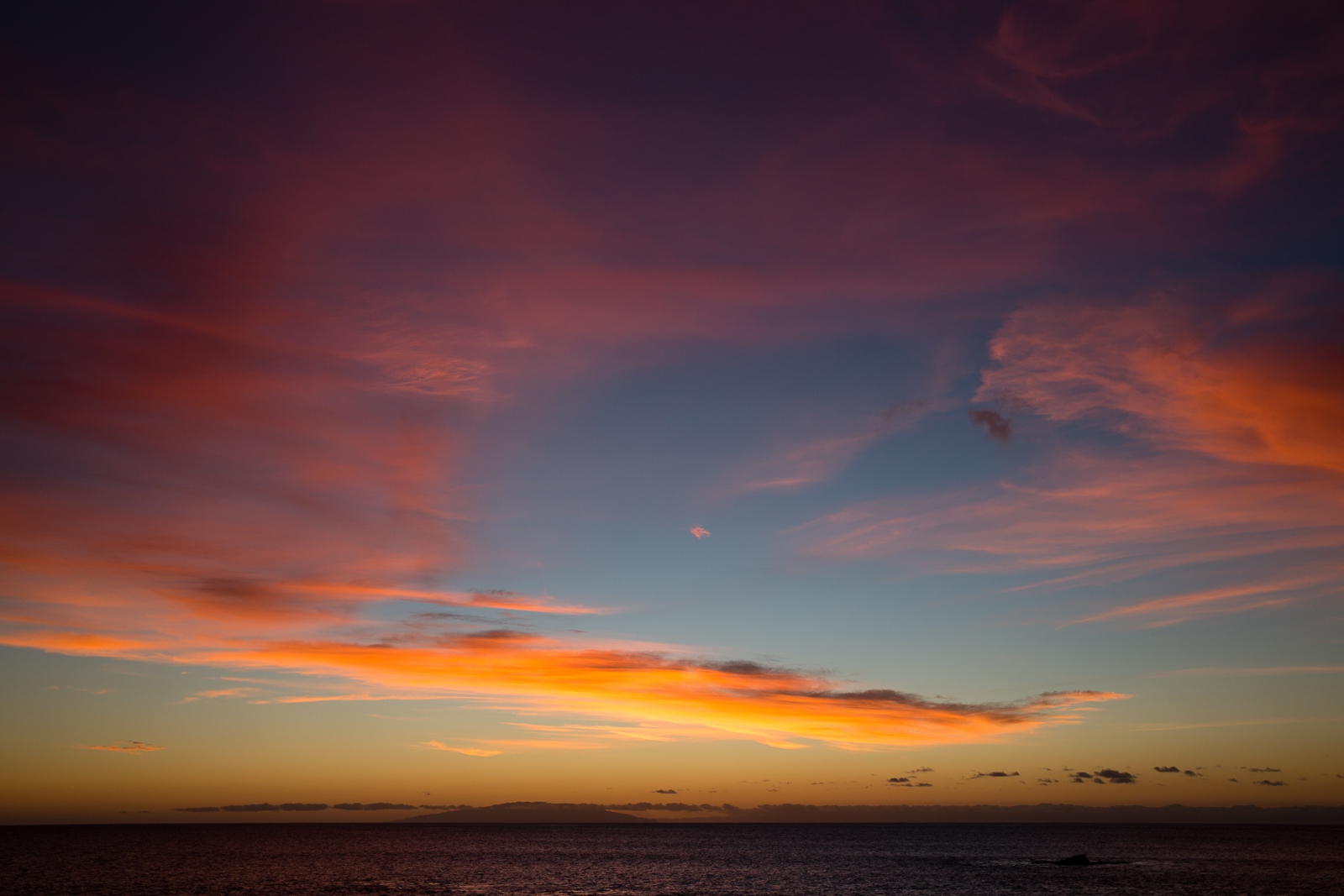
This post shows the sunset on Xmas day, starting with a bright amber sky over El Hiero at 18:19 with the sun just about gone, followed by the clouds slowly turning bright red, starting with the clouds overhead within 10 minutes and slowly moving to the clouds on the horizon another 5 minutes later.

As soon as the sun has disappeared, the crowds watching the sunset from the shore below start to head home, not knowing that they are about to miss the best part of the day’s sunset. Had they had the patience to wait another 20 minutes, they would have witnessed the strong orange glow on the horizon ending the day’s sunset in an absolute fantastic finale.

Time to finish the glass of vino tinto and head down to Christie’s for our Christmas dinner.

At 18:19

At 18:29

At 18:35

At 19:00

Urban grey heron

While walking back home from the Glasgow Mela in Kelvingrove Park to Dowanhill, we spotted this urban grey hero fishing in the shallow waters in the park, completely unperturbed by the hustle and bustle of the festival.

Glasgow Mela

A Saturday afternoon of culture, noise and colours at the Glasgow Mela in Kelvingrove Park. The highlight of the afternoon were the Dahl Foundation Drummers. They are simply fantastic.

Barranco de Tagaluche